Prices and rates
Tickets, reductions, free admission, City Pass, family and student discounts.
See prices →
A practical guide to the imperial bath complex at Viale delle Terme di Caracalla 52. Updated prices, opening hours, map, audio guide and tips to avoid queues.
| Full price | from €8 (+ €2 advance booking online) |
| Typical hours | 09:00 – sunset (ticket office closes one hour earlier) |
| Address | Viale delle Terme di Caracalla, 52 — 00153 Rome |
| Advance booking | Recommended, especially April–October |
| Visit duration | 1.5 – 2.5 hours |
| Nearest metro | Circus Maximus (Line B) – 8 minutes' walk |
Rates and opening data sourced from the official site turismoroma.it. Always verify before your visit.
The Baths of Caracalla — originally named Thermae Antoninianae — are one of the most imposing bath complexes of antiquity. Emperor Caracalla inaugurated them in 216 AD, following construction started by his father Septimius Severus around 212. For over three centuries, they were the heart of Roman social life: 1,600 people could bathe simultaneously in an area exceeding 11 hectares.
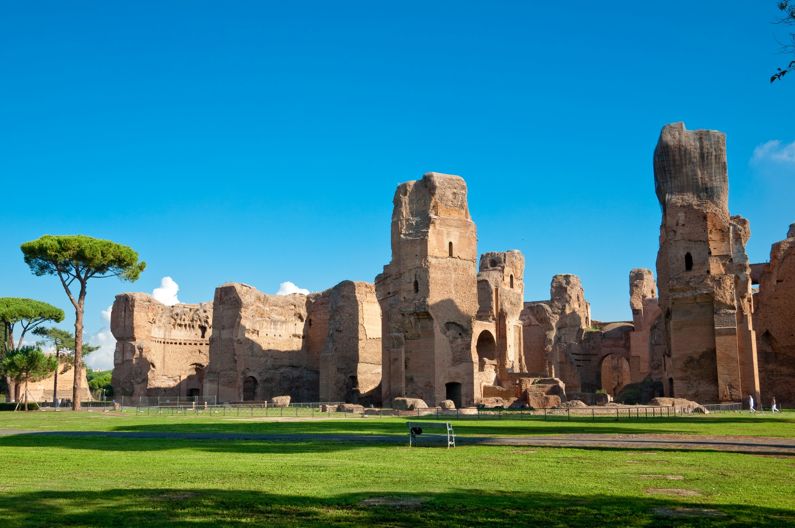
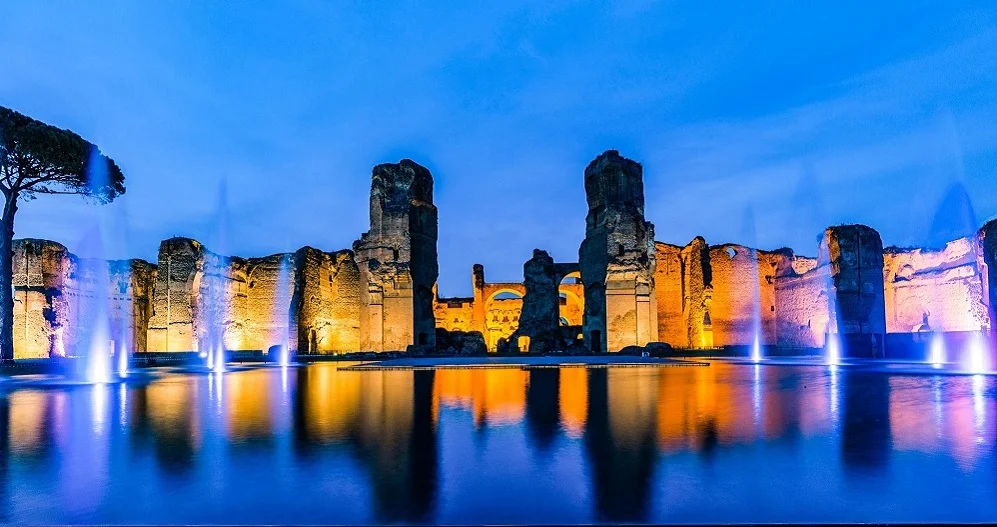
Today the site is one of the capital's most evocative archaeological parks. Brick walls still rise over 30 metres high. Floors preserve mosaics, and the colossal halls — frigidarium, tepidarium, caldarium — attest to the scale of imperial luxury. Walking among the ruins, you understand why Shelley, in 1819, composed much of Prometheus Unbound here.
The full ticket costs €8 according to official Ministry of Culture rates. Buying online adds a €2 advance booking fee, but you skip the ticket queue — a significant advantage on weekends and in peak season.
| Ticket type | Price | Notes |
|---|---|---|
| Full | €8 | Baths of Caracalla only |
| EU students 18–25 | €2 | ID required |
| Under 18 | Free | EU and non-EU |
| Combination ticket | €10–14 | Includes Mausoleum of Cecilia Metella and Villa dei Quintili |
| Audio guide | €5–8 | Available separately |
| Guided tour | from €25 | With licensed guide + ticket |
The dedicated prices page summarises all reductions, free admission and free-entry days (first Sunday of the month, per Ministry calendar).
The Baths open at 09:00. Closing follows sunset and changes month by month: 16:30 in deep winter, up to 19:15 from April to September. Last admission is one hour before closing. Mondays have reduced hours (09:00–14:00). For the full schedule consult the opening hours page.
Metro: Line B, Circus Maximus station, then 600 metres on foot along Viale Aventino and Viale delle Terme di Caracalla. Bus: lines 118, 160, 628 stop outside the entrance. Car: not recommended due to the ZTL and limited parking — the parking guide explains your limited options.
The main route is wheelchair-accessible. Ramps are available and a tactile map is at the entrance. The underground section (Mithraeum) requires the ability to descend steep stairs and is not accessible.
Pages are organised to answer visitors' most common questions. Choose the section you need.
Tickets, reductions, free admission, City Pass, family and student discounts.
See prices →Month-by-month opening times, last admission, special closures.
View hours →Address, map, metro, bus, directions on foot from the centre.
How to get there →The truly useful options in the area, hourly rates and recommended alternatives.
Parking guide →Official app, rental audio guides and free downloadable versions.
Discover the audio guide →Combined walking itinerary: two monuments, half a day.
Combined itinerary →Floor plan of the halls, suggested route, best photo spots.
View the map →From a practical standpoint, the Baths of Caracalla have three ideal time windows and one to avoid. Here's the breakdown for maximum enjoyment during a Roman morning.
The project originated under the Severan dynasty. Septimius Severus began work in 212 AD; his son Caracalla — Marcus Aurelius Antoninus — formally inaugurated them four years later. Elagabalus and Alexander Severus completed the porticoes and hydraulic systems until 235.
The central building measures 214 × 110 metres. It contained: frigidarium with four cold basins, tepidarium as a transitional space, caldarium — a circular rotunda 35 metres in diameter, two symmetrical gymnasiums, libraries, reading rooms, a grand open-air natatio (swimming pool). Beneath the floors ran a system of galleries up to 6 metres high, traversed by hundreds of slaves tending the furnaces.
The baths remained in use until 537 AD, when the Goths under Vitigis cut the aqueducts during the siege of Rome. From then the area fell into long abandonment. In the Renaissance it became a marble quarry: the Farnese Bull, the Farnese Hercules and other monumental sculptures now in Naples were discovered here between 1545 and 1546, at Cardinal Alessandro Farnese's behest.
Check availability and opening hours for your date of interest. The digital ticket arrives via email within minutes of purchase and you present it at entry directly from your smartphone.