On this page
Building the Baths
The Baths were commissioned by Emperor Marcus Aurelius Antoninus Bassianus, known as Caracalla, son of Septimius Severus, who opened them in AD 216. Work went on after his death (AD 217) and was completed by the last emperors of the dynasty, Elagabalus and Severus Alexander.
According to the Soprintendenza they were built in just 5 years, in the southern part of the city, on three descending terraces, and supplied by an aqueduct made specially for them. Their ancient name was Thermae Antoninianae.
What they looked like
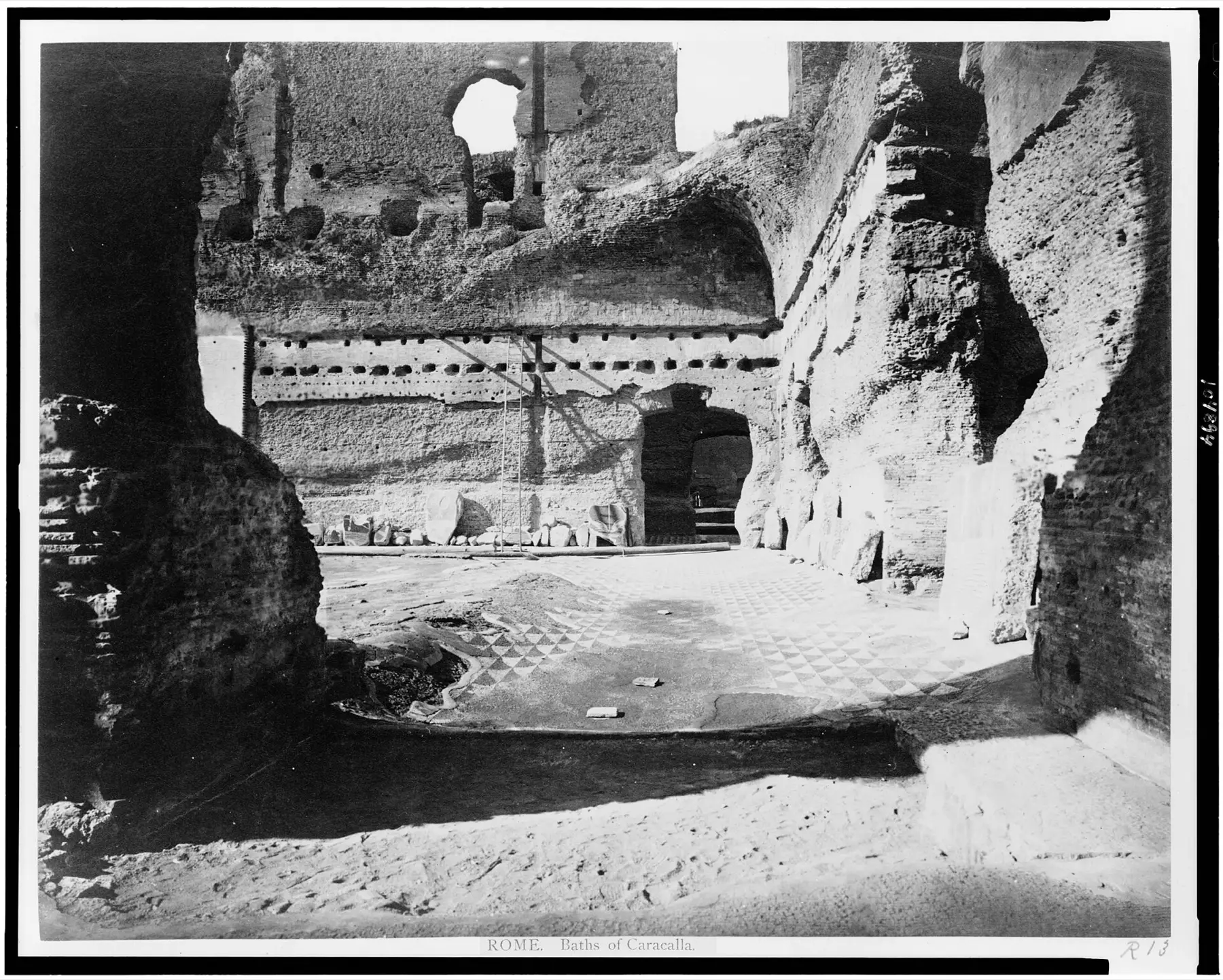
The central building was laid out along a single axis: caldarium, tepidarium, frigidarium and the natatio, the open-air pool. The Soprintendenza highlights the extraordinary variety of decoration, in mosaic and marble.
According to Wikipedia the bath building measured 214 × 110 metres and was 44 metres high. The historian Olympiodorus of Thebes mentions 1,600 people: scholars read this as the number present at the same time, while in a day the Baths could take between 6,000 and 8,000.
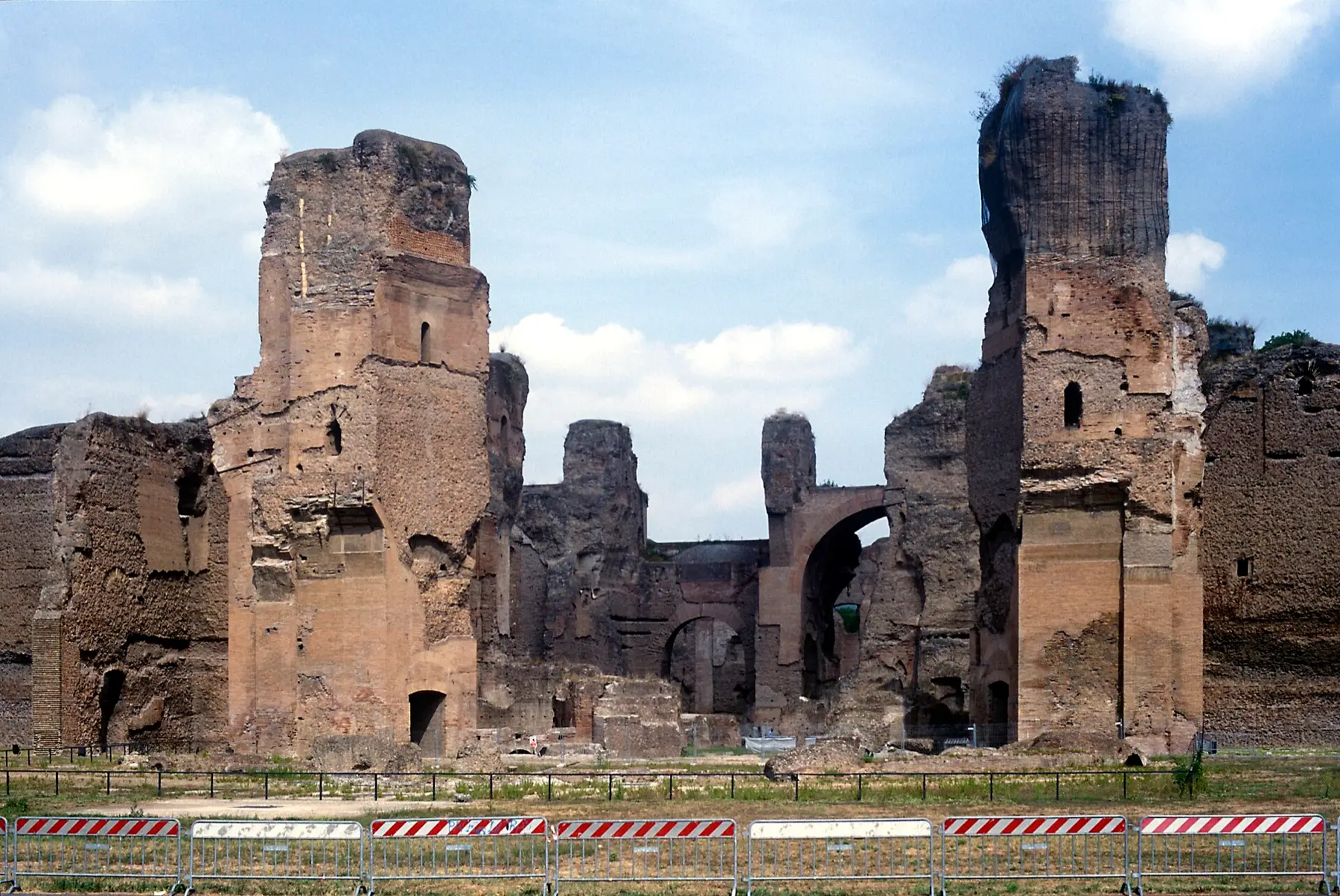
To see them as they were, the free Roma X-PAND app presented by the Soprintendenza uses augmented reality: it shows statues such as the Farnese Hercules and the Farnese Bull, now in Naples. Details on the audio guide page.
Restorations and abandonment
The Baths were restored several times: according to Wikipedia under Aurelian, after a fire, and Diocletian, while under Constantine the caldarium was modified. They stopped working in AD 537, when during the Gothic War the Gothic king Vitiges cut the aqueducts while besieging Rome.
Where the statues and mosaics are today
- Farnese Bull and Farnese Hercules: found in the Baths, now in the National Archaeological Museum of Naples. According to Wikipedia the Bull probably came from the eastern gym and the Hercules from the frigidarium.
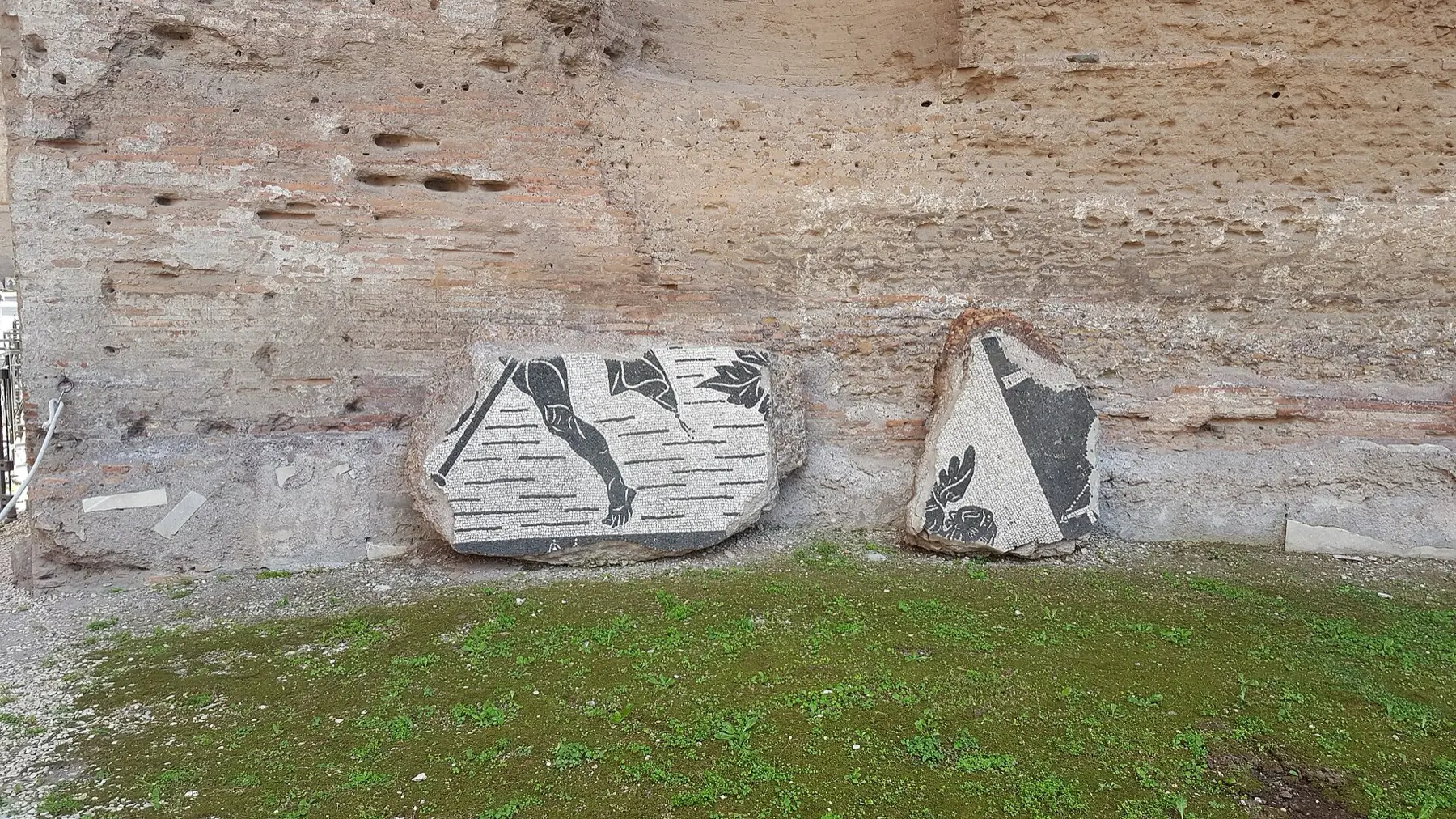
- The athletes mosaics: discovered in 1824 in two exedrae of the complex, now in the Vatican Museums (Wikipedia).
Recent discoveries
- 1912: the Mithraeum is discovered in the underground (Wikipedia), one of the largest preserved in Rome.
- 2022: after restoration, the frescoes of the Domus di Vigna Guidi, a house older than the Baths, are back on view.
- 2024: the Specchio, a water mirror recalling the natatio, is inaugurated.
The tunnels, the Mithraeum and the Domus are covered on the underground and Mithraeum page.
Frequently asked questions
When were the Baths of Caracalla built?
They were opened by Emperor Caracalla in AD 216, after just 5 years of work; building was completed under Elagabalus and Severus Alexander.
When did they stop working?
In AD 537, when the Gothic king Vitiges cut the aqueducts during the siege of Rome.
How many people could they hold?
According to Wikipedia about 1,600 people at the same time, and between 6,000 and 8,000 a day.
Where are the statues from the Baths of Caracalla?
The Farnese Bull and the Farnese Hercules are in the National Archaeological Museum of Naples; the athletes mosaics are in the Vatican Museums.
Sources
- Soprintendenza Speciale di Roma: history of the Baths — checked on 26 October 2026
- Italian Ministry of Culture: Baths of Caracalla — checked on 26 October 2026
- Soprintendenza: the Roma X-PAND app — checked on 26 October 2026
- Wikipedia: Baths of Caracalla — checked on 26 October 2026